Entries Tagged 'Gossip' ↓

KIM KARDASHIAN Birthday Wish For KANYE WEST

kim kardashian wishes kanye west happy b-dayYesterday was Kanye West’s birthday! Kim Kardashian didn’t pass up the opportunity to share her birthday wishes with her groom. She posted this pic on her Instagram page. RELATED: Kim Kardashian debuts her new moniker, Kim Kardashian West.

Kim also wrote the following message to the birthday boy.

Happy Birthday to my husband and best friend in the entire world! You have changed my life in more ways than you know! The way you look at life inspires me! I love you so much!!!

Check out the birthday cake Kim got for Kanye below. Clearly Kanye’s into his “Yeezus” nickname. You know, say what you will about Kim and Kanye, but I think they’re the real deal. I’m going to be very surprised if things don’t work out for them. Happy Belated Birthday, Kanye!

kim kardashian birthday cake for kanye west
kim kardashian wishes kanye west happy b-day

Photos Courtesy of Kim Kardashian

Manchester United Balls: Mourinho Puts In A Better tackle at Old Trafford Than Smalling And Jones Ever Have

AT the Soccer Aid pro-am charity match, Chelsea manger Jose Mourinho makes his move:


@PL_Jokes quips: “Jose Mourinho putting in a better tackle at Old Trafford than Smalling and Jones ever have!! ”


TOWIE’s Gemma Collins’ dating ‘convicted drug dealer’ on day release from prison

She recently enjoyed a very public display of affection with new boyfriend Alexander Moss, but TOWIE star Gemma Collins’ latest beau was reportedly on day release from prison – where he’s seeing out a sentence for drug offences.

The Truth About The 796 Dead Babies In Tuam Galway: Catholic Bashers Ignore The Facts

PA 20041230 The Truth About The 796 Dead Babies In Tuam Galway: Catholic Bashers Ignore The Facts

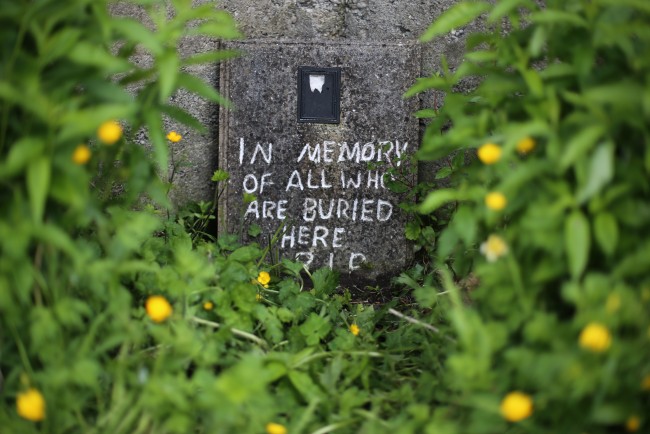
A message left at the site of a mass grave for children who died in the Tuam mother and baby home, Galway


THE Independent talked of “The ‘Irish Holocaust’” that “saw hundreds of babies left to die – and the practice may have been more common than first thought”.

The story of the babies dumped in a septic tank in Tuam, Galway, travelled:

“Bodies of 800 babies, long-dead, found in septic tank at former Irish home for unwed mothers” – The Washington Post.

“Nearly 800 dead babies found in septic tank in Ireland” – Al Jazeera.

“800 skeletons of babies found inside tank at former Irish home for unwed mothers” – New York Daily News.

“Almost 800 ‘forgotten’ Irish children dumped in septic tank mass grave at Catholic home” – ABC News, Australia.

The story was first reported in 1975. Barry Sweeney was 10 when he and a pal Frannie Hopkins jumped over wall into a former mother-and-baby home in Tuam, Galway. The place has been a workhouse before becoming a home for single mothers and their children.

Blondpidge writes:

Reports from 1929 show that a special maternity ward for the unmarried mothers was added to the Home in Tuam. The reason for this is that married women and paying customers at the local district hospital in Connacht were unwilling to share their hospital facilities with the ‘misfortunates’. They wanted segregation. This proposal was opposed by a priest, Canon Ryder who wanted to find accommodation for these mothers in other hospitals. This moving of the mothers to a separate institution lacking trained staff and facilities would have undoubtedly contributed to infant and maternal mortality rates.

Back to the boys, who saw a concrete slab in the grounds. They moved it. Says Sweeney:

“There were skeletons thrown in there. They were all this way and that way. They weren’t wrapped in anything, and there were no coffins. But there was no way there were 800 skeletons down that hole. Nothing like that number. I don’t know where the papers got that.”

He says he saw around 20 skeletons. Catherine Corless thinks the bodies were in an old sewage tank.


PA 20012808 The Truth About The 796 Dead Babies In Tuam Galway: Catholic Bashers Ignore The Facts

The site of a mass grave for children


David McKittrick writes in the Indy:

Only now is the realisation dawning that for decades the Galway earth has held the skeletons of 800 babies and toddlers in “a jumble” that is one of the country’s most unthinkable secrets.

Each new detail of what is being called the Irish Holocaust brings fresh horror. The children were the offspring of unmarried mothers who were housed in a nearby home run by nuns. Many died of malnutrition, at a mortality rate suspiciously well above the national average.

They were stacked on top of each other, in shrouds not coffins, their bodies consigned to the septic tank over a period of decades. No one yet knows whether they bear any marks of identification: it sounds unlikely. If not, they may never be individually identified.

“Tell us the truth about the children dumped in Galway’s mass graves,” demanded Emer O’Toole in the Guardian:

We know about the abuse women and children suffered at the hands of the clergy, abuse funded by a theocratic Irish state. What we didn’t know is that they threw dead children into unmarked mass graves. But we’re inured to these revelations by now.

She seems keen to blame the Church for the bodies.

But what is the difference between the wall of lies, denial and secrecy the church constructed to protect its paedophile priests and a concrete slab over the bodies of 796 children neglected to death by nuns? Good people unearth these evil truths, but the church always survives.


PA 20013912 The Truth About The 796 Dead Babies In Tuam Galway: Catholic Bashers Ignore The Facts

Local historian Catherine Corless


O’Toole links to the story on Irish Central:

Galway historian reveals truth behind 800 orphans in mass grave…

Catherine Corless, the local historian and genealogist, remembers the Home Babies well. “They were always segregated to the side of regular classrooms,” Corless tells IrishCentral. “By doing this the nuns telegraphed the message that they were different and that we should keep away from them.

“They didn’t suggest we be nice to them. In fact if you acted up in class some nuns would threaten to seat you next to the Home Babies. That was the message we got in our young years,” Corless recalls.

She investigated:

Because of Corless’ efforts we now know the names and fates of up to 796 forgotten infants and children who died there, thanks to her discovery of their death records when researching The Home’s history.

“First I contacted the Bon Secours sisters at their headquarters in Cork and they replied they no longer had files or information about The Home because they had left Tuam in 1961 and had handed all their records over to the Western Health Board.”

Undaunted, Corless turned to The Western Health Board, who told her there was no general information on the daily running of the place.

“Eventually I had the idea to contact the registry office in Galway. I remembered a law was enacted in 1932 to register every death in the country. My contact said give me a few weeks and I’ll let you know.”

“A week later she got back to me and said do you really want all of these deaths? I said I do. She told me I would be charged for each record. Then she asked me did I realize the enormity of the numbers of deaths there?”

The registrar came back with a list of 796 children. “I could not believe it. I was dumbfounded and deeply upset,” says Corless. “There and then I said this isn’t right. There’s nothing on the ground there to mark the grave, there’s nothing to say it’s a massive children’s graveyard. It’s laid abandoned like that since it was closed in 1961.”

And then Catherine Corless spoke to the Irish Times:

“I never used that word ‘dumped’,” Catherine Corless, a local historian in Co Galway, tells The Irish Times. “I never said to anyone that 800 bodies were dumped in a septic tank. That did not come from me at any point. They are not my words.”

Adding:

“I never used that word ‘dumped’,” she says again, with distress. “I just wanted those children to be remembered and for their names to go up on a plaque. That was why I did this project, and now it has taken [on] a life of its own.”

The site Butterflies and Wheels has a synopsis of what Corless found:

The Mother/Baby Home in Tuam was opened in 1925 and was run by the Bon Secours Sisters to cater for unmarried mothers and their babies.

This was an era in our history when pregnancy before marriage was deeply frowned upon by church, state and family. The unfortunate woman who found herself in this predicament was quickly sent to an institution such as the Mother/Baby Home out of sight of prying neighbours and relatives.

The Bon Secours Sisters were a nursing congregation who had come from Dublin to take charge of the hospital wing of Glenamaddy Workhouse, which catered for the destitute, old and infirm, orphans and unmarried mothers. These Workhouses had been instigated by the Irish Poor Law since the 1840’s, but now after the Treaty, the Irish Free State reformed the whole system and put in place administration on a county basis, so that separate arrangements were made for the aged and infirm to go to County Homes, and for the unmarried mothers and orphans to go to institutions.
All Workhouses were closed, but it was decided that the one on the Dublin road in Tuam would be chosen as a Mother/Baby Home. The Home building itself was in a good structural state but needed quite a bit of repair. The Sisters and some of the mothers and children began the task of clearing and cleaning, and by the end of the year 1925, all were ready to move in. Dr. Thomas B. Costello was the Medical Officer for the Home and the Rev. Peter J. Kelly, a grandnephew of the former Archbishop of Tuam Dr. John McEvilly, was chaplain.

The building belonged to Galway Co.Co. and they were responsible for repairs and Maintenance, and a capitation grant was paid to the nuns for the cost and upkeep of the mothers and babies, and for the salaries of doctors. A maternity wing was added some time later. The travel writer Halliday Sutherland visited the Home in the 1950’s and it is worth quoting his review of the Home:
“The grounds were well kept and had many flower beds. The Home is run by the Sisters of the Bon Secours of Paris and the Reverend Mother showed me around.

Each of the Sisters is a fully trained nurse and midwife. Some are also trained children’s nurses. An unmarried girl may come here to have her baby. She agrees to stay in the Home for one year. During this time she looks after her baby and assists the nuns in domestic work. She is unpaid. At the end of the year she may leave. She may take her baby with her or leave the baby at the Home in the hope that it will be adopted. The nuns keep the child until the age of seven, when it is sent to an industrial school. There were 51 confinements in 1954 and the nuns now looked after 120 children. For each child or mother in the Home, the Galway Co.Co. pays £1 a week. Children of five or over attend the local schools. The whole building was fresh and clean.”

Haliday Sutherland, however, did not interview any of the resident mothers or helpers. Had he done so, he would have got quite a different story to the one he was told. During my researching the Home, I spoke to some mothers who gave birth there and their account of their confinements speaks of long unattended labours without sight of a Sister or midwife, it was only during the birth that a nurse was in attendance with only the help of an untrained resident. The doctor gave one examination when the mother was first admitted and that was the last they saw of him. No drugs of any kind were ever administered to help with pain, no kindness ever shown. Only mothers who had the ability to pay £100 for delivery services were allowed to leave after the birth. It was a condition that all others must wait a full year in the Home filling domestic duties, cooking, cleaning, minding the babies and children and tending to the gardens. The mothers did not have the choice of keeping their babies as outlined by the writer Halliday Sutherland. Seeing that their confinement in the first place was a hush-hush affair, no family would allow a daughter back home with a baby, as Irish Catholics in those days were in fear of a much distorted doctrine by the Catholic Church that the unmarried mother had committed a heinous crime. It is also to be remembered that the man who had fathered the child was never villainized or held responsible. Neither did the Irish state at that time offer any support for the unmarried mother.

The late John Cunningham, former editor of the ‘Connaught Tribune’ spent his early days in the Tuam Home, as his mother died in his infancy, and in an article which he published in the ‘Connaught Tribune’ April 1998, he speaks of the cruelty of the system which allowed the separation of babies from their mothers. In his article entitled ‘Emotional minefield of the rights of mothers and adopted children from the Ireland of yesterday’, John relayed the conversation he had with a woman who had spent most of her life in the Home: ‘What were the young women to do? Many weren’t wanted at home, they were ostracised by society. In those days a young woman could not become pregnant and stay at home. It was as simple as that. I saw the devastation when they were parted from their children. They nursed the child and looked after it for a year and then they went one way and the child stayed to be adopted or to be boarded out a few years later. I don’t know if any of them recovered from the heart-breaking parting. It was heart rending’.

For the children who were not adopted from the Home, they attended the Mercy Convent N.S. or the Presentation N.S. once they reached the age of 5. They were brought down to the schools in a line and always left a little earlier in the evenings, to ensure that there would be no integration with the other pupils. The sound of their heavy clogs making their way up the Dublin road is a memory that resonates with most people. After they made their first communion, many of the children were fostered out by families. There was an allowance per week from the Government at the time, and a yearly clothing allowance, provided to those families for the care of the children. Unfortunately, there was no vetting system in place to check on the suitability of those families to take those young vulnerable children, and many of them were sent to uncaring unscrupulous families who spent very little of the allowance on them. Many of the children were treated little better than slaves, but had to remain with the families until they reached 16 years of age after which many of them emigrated to England in the hope of a better life. Some of the children fared a little better, with the foster family accepting them as one of their own, and some even inherited the farmsteads they were sent to.

The Home was closed in 1961 as it had fallen into a dilapidated state. The children who had remained there were sent to the Industrial School in Castlepollard, Co. Westmeath. The Home and grounds remained vacant for a number of years, except for the rear building which was used by ‘Bontex’ who made school uniforms.

In the early 1970’s the whole building was demolished to make way for a new housing estate. When I started my research into the Home, I spoke to some of the residents who had moved into this housing estate on the Dublin/Athenry road, and they indicated that there was an unmarked graveyard in an area at the rear of where the Home once stood. It was believed that it was an angels plot for unbaptised babies, but further in my research I discovered that in fact, many children and young babies were also buried here. I was astonished to find that there was no formal marking or plaque to indicate that these children were buried there. I decided to contact the Registration Office in Galway to check for deaths in the Home. I was dismayed to find that in fact the number of children who died in the Home during its existence 1925-1961 numbered nearly 800. I now have all those children’s names, date of death, and age at death, which will be recorded into a special book.
It just did not seem right that all those children lay there unnamed and forgotten. Hence, I made contact with the Western Traveller and Intercultural Development (WTID) and a committee of interested people emerged, all with the view that some sort of Memorial should be erected in this children’s graveyard in dedication to their memory. Our committee is named: ‘The Children’s Home Graveyard Committee’.

We introduced our Project to erect a Memorial to the children, to the Tuam Town Council at one of their meetings, and got a unanimous decision that they would help us with some funding when they get their 2014 Grant Allowance. The Heritage Council have also promised to help but have cautioned us that Heritage Grants have been cut for 2014. Our fundraising is ongoing as it will take a large sum to complete the whole Project, i.e. to erect a proper Monument, clear the pathways into the graveyard, and to maintain the area with flowers and shrubs etc.

A St. Jarlath’s Credit Union account has been set up for anyone who would like to contribute to this very worthy Project.

Catherine Corless

The upshot is reported in the Tuam Herald:

As frequently reported in The Tuam Herald, for the past two years a local committee has been researching the plot and historian Catherine Corless from Brownsgrove found that death records show that at least 796 children died and were buried at the home.

Galway East TD Ciaran Cannon has called for a Dáil inquiry into the circumstances surrounding the unmarked burial site.

Chairperson of the memorial committee Teresa Killeen Kelly says while the story has caught the attention of the national media and politicians have spoken of their shock, the committee’s priority remains to have dignity restored to the dead babies by having a plaque with their names erected at the site.

Such are the facts…

PRINCE HARRY & CRESSIDA BONAS Is There Any Hope For A Reconciliation?

prince harry & cressida bonas (1)It almost looked like Prince Harry was ready to settle down with British socialite Cressida Bonas. She even attended a couple of royal functions with him. Then it was over, just like that. So is there any chance the two will give things a second try? Prince William and Kate Middleton split once, too, if you recall! RELATED: Prince Harry joins twitter.

However, we shouldn’t expect that with Prince Harry and Cressida, according to E! News. A royal insider claims Cressida was “heartbroken” when Harry called everything off without any warning.

Harry thought she was boring toward the end. She didn’t like to go out, party and have fun as often as he does, and they weren’t matched enough for him to commit. Cress is beautiful, intelligent and fun—but she’s no raver like Harry still enjoys. Harry just wasn’t ready to settle down and head down the route of getting serious with his royal commitments. It’s going to take a special girl to tame him.
“Harry’s completely ruled out any hope of a reconciliation now—it’s over for good. As much as they had fun together, she was becoming too jealous when Harry did enjoy nights out with friends. She was constantly worrying about whether he was cheating.
“His continuing friendship with Chelsy Davy also played a part. Chelsy was far more fun than Cressida on a night out and it seems like he’s looking for somebody more like Chelsy now. He wants the fun factor to be a big part of their relationship. Somebody who likes a big night out and isn’t worried about the hangover the next day. And Cress was too square for that.
“Cress knows it’s not going to sort itself out now,” says the source. “Her friends all thought there was a good chance they would be reunited, but Harry’s made things very clear it just doesn’t feel right and he’s not willing to settle for the sake of a marriage.”
“Cressida spent over a year not knowing whether she was ready for a life as a royal. Then she finally gives in and starts talking marriage with all of the gang, and we thought they were heading that way, only for Harry to have a huge change of heart. It must have really hurt her. She spent two years of her life falling for a man she knew would cause a huge amount of disruption to her life, and she finally agrees to bow down and accept what the future may hold, and he ditches her. It’s a bad situation to have fallen into for somebody like her. She feels like the relationship was a total waste.”

Ah, the perils of the dating life! Professionally things are going well, though. Cressida just got her first movie role in ‘Tulip Fever.’ She couldn’t do that if she was still dating the prince!

Exclusive... Cressida Bonas Steps Out In London
Prince Harry Visits The Maxxi Museum In Rome
Exclusive... Cressida Bonas Steps Out In London

Photos by FAMEFLYNET

D-Day: The Germans Story In 43 Haunting Photos

THE D-Day invasion wasn’t all about the winners. It was also about the losers.

We’ve seen the preparations for the Invasion of France. We’ve seen the wonderful photos of the Allied forces storming the Normandy beaches. We’ve seen the brave reporters who risked life and limb to record the fighting.

But what about the Germans? Well, they weren’t all Germans. In this collection of photos of the aftermath, we see Japanese, Poles, Czechs, Russians and Mongols wearing the Nazis colours. Many had been enslaved. Forced to fight. Others were collaborators, who wilfully fought for the Nazis. After the invasion, all were prisoners. Or dead.

These photos are, of course, the ones the men from the Associated Press were allowed to send back for publication. Blood are gore are in short supply. Retribution is absent. But let’s not dwell on what we don’t see. We should look at what we can see.

Every face tells a story.


PA 10746181 D Day: The Germans Story In 43 Haunting Photos

This French girl, who was engaged to a German soldier, refused to leave him even after he was captured and confined in a prisoner of war stockade on August 26, 1944. (AP Photo)


PA 10678646 D Day: The Germans Story In 43 Haunting Photos

German prisoners file past the Town Hall at Cherbourg on their way to a stockade on June 28, 1944. One wounded prisoner is taken in a small truck. General Eisenhower referred to the fall of Cherbourg as the End of the “second phase in the campaign of liberation”. (AP Photo)

PA 9064438 D Day: The Germans Story In 43 Haunting Photos

General Major Robert Sattler, Deputy German Commander of the Fort Du Roule, at Cherbourg, France on June 28, 1944, after his capture. (AP Photo)
Date: 28/06/1944

PA 11157928 D Day: The Germans Story In 43 Haunting Photos

A study of German prisoners taken by the Americans in their drive on Cherbourg, France on June 28, 1944. The fall of Cherbourg ends what General Eisenhower refers to as the “second phase of the campaign of liberation.” (AP Photo/Laurence Harris)

PA 10678648 D Day: The Germans Story In 43 Haunting Photos

A column of German prisoners, captured in fighting for the outer defenses of Cherbourg are marched to a prisoner of war stockade behind the lines on June 29, 1944. (AP Photo)

PA 10702727 D Day: The Germans Story In 43 Haunting Photos

Commander of the German forces which capitulated at the French port of Cherbourg, France, stand with their conqueror on June 30, 1944, after giving up the fight. From left to right are: Lt. Gen. Carl Wilhelm von Schlieben, German garrison commander; Maj. Gen. J.L. Collins, of the U.S. Seventh Corps which took the city; and German Admiral Hennecke, who had been in charge of the port’s sea defenses. (AP Photo/Peter J.)

PA 10775250 D Day: The Germans Story In 43 Haunting Photos

Hands clasped over their heads, a group of German prisoners (top) is herded down a slope on the French coast on June 21, 1944, to a ship to take them to a prison camp, as American command post bustles with activity below. American flag on ground provides protection against shelling from allied boats and bombing by allied planes. (AP Photo)

PA 10757674 D Day: The Germans Story In 43 Haunting Photos

This Japanese, captured while serving in the German army in France on June 21, 1944, gives his name and serial number to an American as he files along with other German prisoners rounded up in the Normandy coast area. (AP Photo)

PA 10776356 D Day: The Germans Story In 43 Haunting Photos

PA 10809745 D Day: The Germans Story In 43 Haunting Photos

Three American soldiers, members of an airborne infantry outfit who were captured and held by the Germans near Orglandes, France on June 25, 1944, look at some of their former captors, now held by their comrades who captured the village and released the Americans. The soldiers are from left to right are front: Pfc, James C. Bishop, Dallas, Tex, Pvt. Joseph Burnett, Huntington, W.Va. and Pfc. (AP Photo)

PA 10746098 D Day: The Germans Story In 43 Haunting Photos

German soldiers, captured by Allied Armies on the Normandy beachheads in France on June 16, 1944, are checked by fellow prisoners. (AP Photo/Jack Rice)

PA 10702716 D Day: The Germans Story In 43 Haunting Photos

A stretcher bearer attends to a wounded German near the village of Lingevres, France on June 16, 1944, where a fierce battle was fought. (AP Photo)

PA 10746188 D Day: The Germans Story In 43 Haunting Photos

German prisoners captured by the FFI at Maizy sur Oise, France on Sept. 18, 1944 including officers of the Luftwaffe, stand in formation prior to being transferred to a detention area. Many of them are shoeless. (AP Photo)

PA 10746136 D Day: The Germans Story In 43 Haunting Photos

An American soldier gives a drink of water to a wounded German prisoner lying on a stretcher somewhere in the Normandy, France on June 19, 1944, battle area through which the allies advanced. (AP Photo)

PA 9058793 D Day: The Germans Story In 43 Haunting Photos

Two German soldiers surrendered to a solitary American soldier in Barneville, on the west coast of the Cherbourg peninsula, in France, on June 20, 1944. The Americans pushed through the town like a whirlwind after the Germans who are now in full retreat for Cherbourg. The prisoners were turned over to the local police and lodged in the town’Â’s jail. (AP Photo)

PA 10874236 D Day: The Germans Story In 43 Haunting Photos

German prisoners of war, in the battle for France, carry a wounded comrade to an evacuation area on the beach where landing craft will speed them out to ships in the English Channel for treatment by Allied doctors on June 15, 1944. (AP Photo)

PA 10702721 D Day: The Germans Story In 43 Haunting Photos

This German soldier managed to keep his mascot dog when he was captured, with other members of his company, by allied troops in the beachhead sector in France on June 15, 1944. (AP Photo)

PA 10917645 D Day: The Germans Story In 43 Haunting Photos

Not all of the GI Army prisoners taken on the battlefields France are stalwart, Blonde Aryans who we born to rule the world. Not quite so exclusive these days, the Herrenvolk hob-nobbing with men of all races – any as a matter of fact, who can carry a gun Adolf. Among the prisoners captured in France on June 15, 1944, were: (left to right) front row; Yugoslav; an Italian; a Turk; a Pole; a German; a Czech; a Russian who forced into the army when the Nazis his town; and a Mongol. (**Caption information received incomplete) (AP Photo)

PA 10746194 D Day: The Germans Story In 43 Haunting Photos

First the troops wade ashore from landing craft. Then the gradual development of land operations some of these early stages. German prisoners being marched along beach on June 11, 1944. (AP Photo)

PA 10702711 D Day: The Germans Story In 43 Haunting Photos

German soldiers, former “Herrenvolk”, come over the crest of a hill with their hands over their heads in surrender to American troops during the battle for the Norman beachhead in France on June 11, 1944. (AP Photo)

PA 9037668 D Day: The Germans Story In 43 Haunting Photos

More than six hundred German prisoners, the largest number yet to reach this country since the opening of the second front, arrived in England on June 12, 1944. Here they are seen being marched under guard to a prisoners-of-war camp. (AP Photo)

PA 9037579 D Day: The Germans Story In 43 Haunting Photos

American troops moving up to the front lines, right, pass a long line of German prisoners marching back to a holding camp prior to being shipped out of France, on June 12, 1944. (AP Photo)

PA 10746484 D Day: The Germans Story In 43 Haunting Photos

A German officer smiles as he is interrogated by American soldiers who landed on the beaches of Normandy, France on June 12, 1944. (AP Photo/Peter Carroll)

PA 9902933 D Day: The Germans Story In 43 Haunting Photos

Two long double lines of German prisoners are checked by Allied officers, center, as they stand beside barded wire fences of compound in England, June 12, 1944, after their capture on the Normandy coast of France. (AP Photo)

PA 4760814 D Day: The Germans Story In 43 Haunting Photos

German prisoners of war, captured during the Allied Normandy invasion, are marched to the ships that bring them into captivity in England, in June 1944, at Bernieres-sur-mer, France. (AP Photo)

PA 8628777 1 D Day: The Germans Story In 43 Haunting Photos

A wounded German soldier who surrendered to the Allied invasion forces, stands surrounded by a crowd of civilians and a French gendarme on the left, in Barneville in the Normandy region, June 1944. (AP Photo)

PA 8653806 D Day: The Germans Story In 43 Haunting Photos

A dead German soldier seen in this June 1944 photo

PA 8644098 1 D Day: The Germans Story In 43 Haunting Photos

A 16-year old German soldier has his hands clasped over his head as he is taken prisoner with thousands of other Wehrmacht soldiers, at Cherbourg, France, during the Allied Normandy invasion in June 1944. (AP Photo)

PA 8673181 D Day: The Germans Story In 43 Haunting Photos

Led by a British soldier, a line of German prisoners of war is marched along a barbed-wire barricaded lane as they arrive at a POW camp somewhere in England, in June 1944, following their capture in Allied assault operations on the French Normandie coast. (AP Photo)

PA 8683671 D Day: The Germans Story In 43 Haunting Photos

German prisoners of war are led away by Allied forces from Utah Beach, on June 6, 1944, during landing operations at the Normandy coast, France. (AP Photo)

PA 10746133 1 D Day: The Germans Story In 43 Haunting Photos

Canadian invasion troops stand guard over the first German prisoners captured during the assault on France by Allied forces on June 6, 1944 along a 100 mile front on the Normandy coast between LeHavre and Cherbourg. Wounded soldiers are being treated, in the background. At extreme bear are German coastal fortifications of masonry, silenced by the invaders. (AP Photo)

PA 9085573 D Day: The Germans Story In 43 Haunting Photos

A steady stream of German prisoners is pouring into this country from the battle of Normandy. German prisoners, captured on the beaches of Normandy, march through a street, somewhere in England, on June 9, 1944, after disembarkation at an English port. (AP Photo)

PA 8685530 D Day: The Germans Story In 43 Haunting Photos

A long line of German prisoners of war from D-Day invasion on the French beachheads march through a coastal town in England on their way to an internment camp during World War II on June 9, 1944. (AP Photo)

PA 9085584 D Day: The Germans Story In 43 Haunting Photos

The first Nazi airman to be shot down in the invasion area stands dejected amongst other prisoners at a camp somewhere in England, on June 9, 1944. (AP Photo)

PA 10746086 D Day: The Germans Story In 43 Haunting Photos

Some of the first German soldiers to surrender to the Americans during the battle of the Normandy beaches on June 9, 1944. (AP Photo)

PA 10746129 D Day: The Germans Story In 43 Haunting Photos

Some of the first German prisoners captured in the invasion of Normandy on June 9, 1944. (AP Photo)

PA 9037457 D Day: The Germans Story In 43 Haunting Photos

An American paratrooper holds a Nazi prisoner at the point of his bayonet, one of many incidents during the American advance into Normandy, in France, on June 10, 1944. (AP Photo)

PA 9037468 D Day: The Germans Story In 43 Haunting Photos

PA 9037505 D Day: The Germans Story In 43 Haunting Photos

German prisoners help evacuate some of their own wounded, and are seen being put on board Red Cross boats to be taken out to the mother ship, standing by off the beachhead area in Normandy, France on June 10, 1944. (AP Photo)

PA 10702692 D Day: The Germans Story In 43 Haunting Photos

German officers, captured on the beaches of Normandy in France, hang their heads dejectedly as they arrive on June 10, 1944 in England en route to prisoner of war camps. (AP Photo)

PA 10776399 D Day: The Germans Story In 43 Haunting Photos

Badly battered German gunner of a gun nest on beach of northern France staggers out of underground nest under watchful eye of a burly U.S. Army M.P. on June 10, 1944.(AP Photo)

PA 10874232 D Day: The Germans Story In 43 Haunting Photos

Badly battered German gunner of a gun nest on beach of northern France staggers out of underground nest under watchful eye of a burly U.S. Army M.P. on June 10, 1944.(AP Photo)

PA 10776356 1 D Day: The Germans Story In 43 Haunting Photos

A wounded German prisoner, wearing a camouflages uniform, is escorted to an allied first aid station in France on June 21, 1944, by Pvt. Gaston Daisneault, Chateauguay, Quebec, (left) and Pvt. Robert Bonneau (center, background), of Lyster, Quebec. (AP Photo)

Jennie Lee And Her Bazoomers Fan Club: The Burlesque Great In Photos

JENNIE Lee (nee Virginia Lee Hicks; 1928-1990)  was the “BAZOOM GIRLS”, main attraction of the “BAZOOMERS Fan Club”. She promised “Miss 44 and Plenty More”. (Although she was a 42-26-37.) As well as stripping for joy, she “formed the ‘Exotic Dancers League’ in 1955 to fight for dancers’ rights.. And by ‘57, began to hold annual conventions where dancers could reunite and hand out a “Fanny Award” (seen in the photo) to a public figure they deemed promoted the spirit of Burlesque.. Mickey Rooney, Walter Winchell, and Tony Curtis, were some of it’s earliest recipients.”

key-post

◄ Back

key post Jennie Lee And Her Bazoomers Fan Club: The Burlesque Great In Photos

◄ Back
  • thumbs tumblr lsvkimr1nb1qmmr9io1 500 Jennie Lee And Her Bazoomers Fan Club: The Burlesque Great In Photos
  • thumbs joy Jennie Lee And Her Bazoomers Fan Club: The Burlesque Great In Photos
  • thumbs cars Jennie Lee And Her Bazoomers Fan Club: The Burlesque Great In Photos
  • thumbs key post Jennie Lee And Her Bazoomers Fan Club: The Burlesque Great In Photos
  • thumbs wicked Jennie Lee And Her Bazoomers Fan Club: The Burlesque Great In Photos
  • thumbs fab Jennie Lee And Her Bazoomers Fan Club: The Burlesque Great In Photos
  • thumbs bazoomers Jennie Lee And Her Bazoomers Fan Club: The Burlesque Great In Photos
Picture 1 of 32

Spotters: Burleskateer, Mudwerks, RetroGirly, NofrillsRetro, 1950sunlimited,

LEONARDO DICAPRIO Refuses To Enter A Club While KARDASHIANS Are Present

Leonardo DiCaprio

Leonardo DiCaprio is one of the the ultimate A-List actors… and he proved it a few days ago by refusing to go into a club while the Keeping Up With The Kardashian cameras were there.

Over the weekend Brody Jenner’s friend, Frankie Delgado, was hosting a birthday party at XIV and – of course – Brody and his dad, Bruce Jenner were in attendance. And where there’s a Kardashian (or, in this case, a Jenner) there are cameras.

When Leo arrived at the club and found out who was inside, he refused to go in until he was reassured that they were gone. And he isn’t the only one! Kim’s former bestie, Paris Hilton, also refused to go into the party while the cameras were there.

While it’s totally understandable that Leo, a famed actor, would want to stay away from the reality TV cameras, it’s a bit surprising that Paris – who became famous because of the paparazzi and reality TV – would shy away. Unless tensions between her and Kim are still running super high.

The 86th Annual Academy Awards - Arrivals C
Celebrities Attend The BAFTA Awards In London
The 86th Annual Academy Awards - Arrivals A7
Celebrities Attend The BAFTA Awards In London
The 86th Annual Academy Awards - Arrivals A7
The 86th Annual Academy Awards - Arrivals C
The 86th Annual Academy Awards - Arrivals A7
Paris Hilton Enjoys A Night Out At Warwick Nightclub

Photos via Fame Flynet.

BETHENNY FRANKEL Settles Her Custody Battle With Jason Hoppy

Bethenny Frankel Out For A Stroll In NYCWell THIS is good news. Bethenny Frankel and Jason Hoppy have reached a settlement in their bitter custody battle over their daughter, Bryn. The two will “co-parent.” RELATED: Should Bethenny Frankel exercise damage control by settling custody case?

The details of the settlement are confidential, so whether or not that means joint custody is unclear. I’m guessing it does, since I don’t think Jason would settle for anything less. Jason’s attorney released a statement.

My client is delighted that this custody dispute has been resolved; that his co-parenting status has been acknowledged; that the parties’ child will have the benefit of being raised by both parents; and most importantly, that his daughter will no longer be at the mercy of a high profile courtroom battle.”

I wonder if Bethenny just let this drag out long enough so she could testify and make all of her accusations against Jason public? He hasn’t had a chance to state his side since he hasn’t taken the stand yet. Well, whatever the reason, it’s best for Bryn that the custody battle be resolved as quickly as possible.

Bethenny Frankel Out For A Stroll In NYC

Photos by FAMEFLYNET

Transfer Balls: Manchester United Will Buy Kevin Strootman When Old Trafford Freezes Over

PA 19254131 Transfer Balls: Manchester United Will Buy Kevin Strootman When Old Trafford Freezes Over


TRANSFER Balls: A quick look at Manchester United and Kevin Strootman:

June 4, The Guardian: “Manchester United make Kevin Strootman a £30m January target”

Louis van Gaal has made Kevin Strootman a £30m January target for Manchester United – and the midfielder would be open to the move should Roma consider it, although there is yet to be any official contact between the clubs.

So. This news is based on what?

The Dutchman is recovering from a serious knee injury that has ruled him out of Van Gaal’s Holland squad for the World Cup in Brazil, with the 24-year-old not expected to play again until the autumn. While Strootman is content at Roma and has four years left on the contract he signed last summer…

Are there any facts to support this rather odd story about a player whose happy at his club arriving in Manchester next winter?

Strootman’s agent, Chiel Dekker, insisted that only if Roma were minded to sell would the transfer occur.

Well, d’uh. He is contracted to play for them. Roma would need to be involved. Yes.

Dekker admitted Strootman, who has been injured since March, might be of interest to Van Gaal in the future.

That definite £30m bid is now “might be interested…in the future”?

“Roma do not want to sell. The first thing is it’s all between the clubs. And it’s also a very difficult decision because he has to choose between a fantastic club in Rome, a club that bought him and supported him while he was injured and [then] you have his personal coach of the national team at United.”

He has to choose..? Why? United have made no offer. All we hear is an agent talking in public. And that agent adds:

“He’s very happy at Rome, he’s happy to stay because they play Champions League next season and happy to recover [from] his injury, so at this stage we are not part of any discussion.”

So. About that £30m transfer..? Discuss.